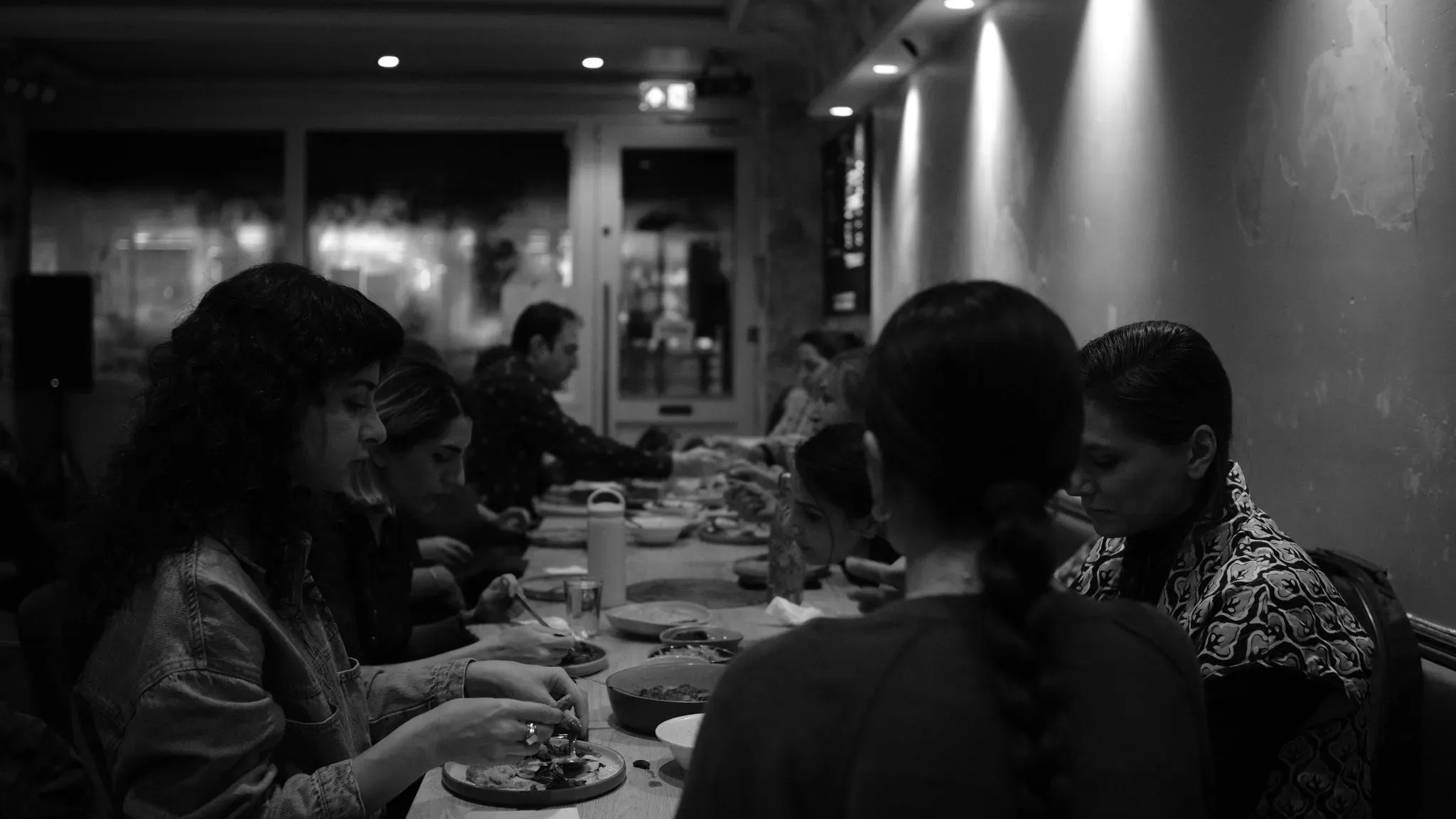
A reflection on the lost art of eating together, and why we need it back
The simple act of sitting down to eat together remains one of the most powerful ways to nurture wellbeing.
Across countless studies, shared meals are linked to stronger relationships, improved mental health, and a deeper sense of belonging. When we eat with others, we slow down. We listen, exchange, and connect. The meal becomes a shared rhythm that restores something essential in a fragmented world.
In the UK, loneliness has quietly become an epidemic, shaped by housing precarity, disconnection from neighbours, and the erosion of communal life.
Yet research consistently shows that organised gatherings around food, neighbourhood suppers, shared lunches, community dinners, can strengthen social trust, boost happiness, and even improve physical health.
Eating with others offers a protective effect, fostering purpose and identity, while the disappearance of such spaces leaves many feeling adrift.
A shared table does more than provide nourishment. It creates common ground. Across differences of age, income, or background, dining together allows people to encounter one another not as service users, strangers, or statistics, but as equals. Food becomes the medium through which empathy is restored and community reimagined.
A Forgotten Legacy of Communal Dining
The UK once understood the power of collective eating. During the First World War, Sylvia Pankhurst and the East London Federation of Suffragettes opened "Cost Price Restaurants", “radical spaces” where anyone could access a hot, nutritious meal without stigma or profit. Supported by local growers and volunteers, these kitchens embodied community self-organisation and solidarity at a time of crisis.
Pankhurst’s model was later echoed in the state-sponsored National Kitchens and British Restaurants, vast networks of communal dining halls established during both world wars. These were not charitable canteens, but public spaces where people ate side by side at long tables adorned with tablecloths, flowers, and sometimes music. For many working-class families, this was their first experience of dining out. A moment of dignity and conviviality in the midst of scarcity.
By 1941, more than two thousand such restaurants served hundreds of thousands of people daily. They offered affordable meals, community, and warmth at a time when private kitchens were often cold or damaged by bombing. Crucially, they reframed food access as a collective right rather than an act of pity.
Yet once austerity lifted, the communal table began to vanish. The post-war years brought supermarkets, fast-food chains, and an ideology of individual consumption. Eating became increasingly private, hurried, and commodified. The idea that a public meal could embody equality and care faded from memory.
The Act of Eating Together
Across cultures and throughout history, eating together, what scholars call 'commensality" - has been one of the oldest and most enduring forms of human connection. To share a meal is to share time, space, and story. UNESCO describes this act as “the foundation of the cultural identity and continuity of communities,” noting how the Mediterranean tradition of gathering around the table embodies hospitality, neighbourliness, and respect for diversity.
Beyond the practical benefits, communal dining nourishes more than the body. Research consistently shows that eating with others improves wellbeing, reduces loneliness, and strengthens community ties.
The simple gesture of sharing food transforms the meal into a space of exchange and belonging, one where the rhythms of conversation, laughter, and attention knit people together in ways that few other activities can.
Eating together also helps bridge cultural and social divides. Studies show that sharing food fosters equality and trust across class, race, and gender lines. A kind of social lubricant that softens boundaries and allows empathy to take root.
To eat side by side is to recognise one another’s humanity; it’s an act that resists the forces of isolation, consumption, and division that so often shape modern life.
Modern nutrition science is beginning to echo what culture has long known: health is not only what we eat, but how we eat, and with whom.
Conviviality, the pleasure of eating together, is increasingly recognised as a public health principle in its own right. When people share food, they tend to eat more balanced meals, feel less lonely, and cultivate habits that nourish both body and mind.
Reclaiming the Table
“Acts of food and care” seeks to revive this long-neglected tradition in a contemporary way, through a series of locally grown, tasty, organic, seasonal communal dinners that celebrate the act of gathering. Each meal becomes a site of connection, creativity, and care: a place where local food, conversation, and culture intertwine.
These events will not only nourish the community but also reassert that eating together is a public good - a quiet yet radical gesture against isolation, inequality, racism, and the commodification of daily life.
At a time when many are struggling to afford good food or to find a place where they feel they belong, returning to the communal table may be one of the simplest and most transformative things we can do.
Order your tickets for our communal dinners on our Events page
For Further Reading -
Sylvia Pankhurst: Suffragette, Socialist, Anti-imperialist … and Social Worker?
Feeding the People in Wartime Britain
Fostering wellbeing and healthy lifestyles through conviviality and commensality